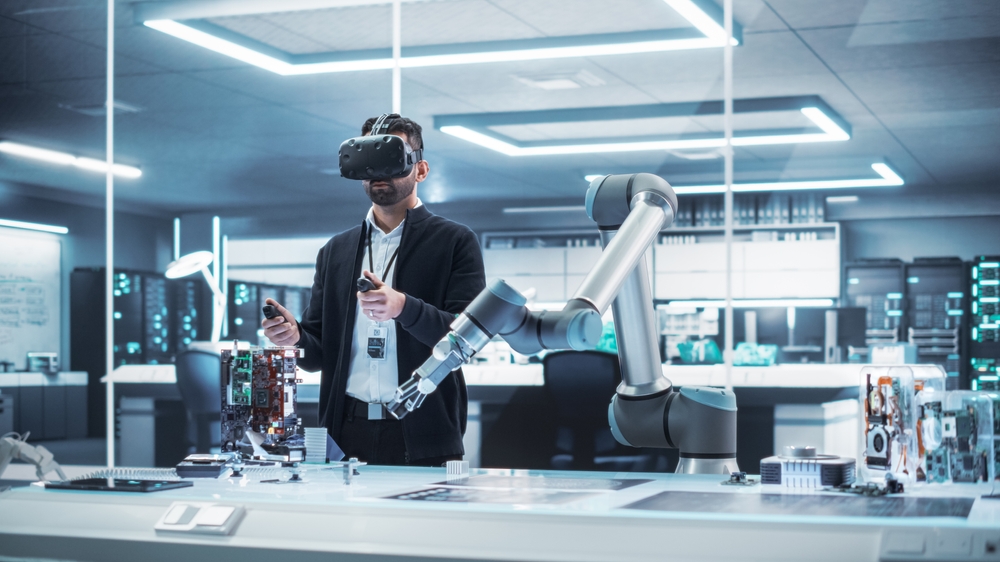

Robotics,Engineer,Operating,A,Futuristic,Robotic,Arm,,Using,A,Virtual

Exploring IoT Applications: Whitepaper Insights

Exploring IoT Applications: Whitepaper Insights

This whitepaper delves into the transformative world of the Internet of Things (IoT) and its increasingly vital role in our digital landscape. IoT represents the interconnected network of physical devices, from everyday household appliances to complex industrial equipment, that collect and exchange data, ushering in a new era of automation, efficiency, and innovation. Alongside the rise of IoT, the concept of virtualization has also gained traction, enabling the seamless integration and management of these connected devices. This comprehensive whitepaper explores the convergence of IoT and virtualization, highlighting the myriad of applications, benefits, and challenges that organizations and individuals must navigate in the pursuit of a more connected future.
- by Spaceone Global Technology Private Limited

The IoT Landscape

The Internet of Things (IoT) encompasses a vast and ever-evolving ecosystem of interconnected devices, sensors, and systems that collect, process, and exchange data. From smart homes and wearable technologies to industrial automation and city-wide infrastructure, IoT is transforming the way we live, work, and interact with our environment. This transformative technology has the potential to revolutionize various industries, streamline operations, and enhance the overall quality of life for individuals and communities.

At the heart of the IoT ecosystem are the interconnected devices, which can range from simple sensors monitoring environmental conditions to complex machines and industrial equipment. These devices are equipped with the ability to communicate with one another, share data, and respond to changes in real-time, enabling a level of automation and optimization that was previously unimaginable.

The Role of Virtualization in IoT

Virtualization, a fundamental concept in modern computing, has become increasingly crucial in the context of IoT. Virtualization allows for the creation of virtual versions of physical devices, such as servers, storage systems, and networks, enabling more efficient and flexible management of these resources. In the IoT landscape, virtualization plays a vital role in addressing the challenges posed by the sheer volume and diversity of connected devices.

Enhanced Scalability

Virtualization allows for the rapid deployment and scaling of IoT infrastructure, enabling organizations to accommodate the growing number of connected devices and the ever-increasing data generated by these devices. By leveraging virtual resources, IoT systems can be easily scaled up or down to meet changing demands, ensuring optimal performance and costeffectiveness.

Improved Efficiency

Virtualization in IoT enables the consolidation of multiple physical devices onto a single, virtualized platform, reducing the overall hardware footprint and energy consumption. This, in turn, leads to lower operational costs and a smaller environmental impact, making IoT deployments more sustainable and costeffective.

Increased Flexibility

The flexibility offered by virtualization is a crucial asset in the dynamic IoT landscape. Virtual IoT devices can be easily deployed, configured, and managed remotely, allowing for faster response times, reduced maintenance overhead, and the ability to adapt to evolving requirements and emerging technologies.

IoT Applications and Use Cases

The convergence of IoT and virtualization has unleashed a vast array of applications and use cases, transforming various industries and aspects of our daily lives. From smart homes and cities to industrial automation and healthcare, IoT-powered solutions are enabling unprecedented levels of efficiency, optimization, and innovation.

Smart Home

IoT devices in the home, such as smart appliances, security systems, and energy management systems, can be virtualized to provide centralized control, remote access, and enhanced automation, leading to improved energy efficiency, increased safety, and a more convenient living experience.

Smart Cities

IoT-enabled infrastructure, including traffic management systems, waste management, and public utilities, can be virtualized to optimize resource allocation, improve service delivery, and enhance the overall quality of life for citizens. This integration of IoT and virtualization is a key driver in the development of smart, sustainable cities.

Industrial Automation

In the industrial sector, IoT sensors and devices can be virtualized to enable predictive maintenance, real-time monitoring, and remote control of manufacturing processes. This transformation leads to increased productivity, reduced downtime, and improved operational efficiency.

Healthcare

IoT-powered wearable devices and medical equipment can be virtualized to provide remote patient monitoring, personalized treatment plans, and enhanced data analysis. This integration of IoT and virtualization is revolutionizing the healthcare industry, improving patient outcomes and reducing the burden on healthcare systems.

Challenges and Considerations

While the convergence of IoT and virtualization offers vast potential, it also presents a range of challenges and considerations that organizations and individuals must address to fully harness the benefits of this transformative technology.

Security and Privacy

The proliferation of interconnected devices and the centralization of data in virtualized environments heighten concerns around cybersecurity and data privacy. Robust security measures, such as encryption, access controls, and threat detection, must be implemented to protect against malicious attacks and unauthorized access.

Interoperability

The diverse range of IoT devices and platforms can create compatibility issues, making it challenging to achieve seamless integration and data exchange. Establishing industry standards and developing universal communication protocols are crucial to ensuring interoperability and enabling the smooth operation of IoT and virtualized systems.

Data Management

The massive influx of data generated by IoT devices poses significant challenges in terms of storage, processing, and analysis. Effective data management strategies, including the use of cloud computing and edge computing, are necessary to handle the vast amounts of data and extract meaningful insights from it.

Regulatory Compliance

As IoT and virtualization technologies become more prevalent, organizations must navigate a complex landscape of regulations and industry standards. Compliance with data protection laws, industry-specific regulations, and emerging guidelines is crucial to avoid legal and reputational risks.

The Future of IoT and Virtualization

The convergence of IoT and virtualization is poised to continue shaping the future of technology, driving innovation, and transforming various industries. As these technologies evolve, we can expect to see even more seamless integration, enhanced capabilities, and increasingly intelligent and autonomous systems.

Artificial Intelligence and 1 Machine Learning

The integration of AI and ML with IoT and virtualization will enable more advanced decision-making, predictive analytics, and autonomous control, further optimizing processes, enhancing user experiences, and driving innovation across a wide range of applications.

Edge Computing and 5G

The rise of edge computing and the widespread deployment of 5G networks will empower IoT and virtualized systems with faster data processing, lower latency, and increased responsiveness, enabling real-time decision-making and unlocking new use cases across industries

Sustainability and Environmental Impact

As the world becomes more conscious of the environmental impact of technology, the convergence of IoT and virtualization will play a pivotal role in driving sustainable practices, improving energy efficiency, and reducing the carbon footprint of various industries and applications.

Benefits of Integrating IoT and Virtualization

The integration of IoT and virtualization offers a multitude of benefits, transforming the way organizations and individuals approach technology and problem-solving. From enhanced efficiency and scalability to improved security and sustainability, this convergence is poised to revolutionize the way we live, work, and interact with our environment.

Efficiency

The virtualization of IoT devices and infrastructure enables more efficient resource utilization, reduced operational costs, and improved performance, ultimately leading to enhanced productivity and cost savings.

Scalability

The flexible and dynamic nature of virtualized IoT systems allows for seamless scaling, enabling organizations to accommodate growing demands, adapt to changing requirements, and future-proof their technology investments.

Security

Virtualization enhances the security of IoT deployments by providing centralized control, access management, and the ability to implement robust security measures, such as firewalls and encryption, to protect against cyber threats.

Sustainability

The integration of IoT and virtualization can contribute to a more sustainable future by improving energy efficiency, reducing resource consumption, and enabling the development of ecofriendly, data-driven solutions.

Conclusion: Embracing the IoT-Virtualization Convergence

The convergence of IoT and virtualization is a transformative force, unlocking unprecedented opportunities for innovation, efficiency, and sustainability across a wide range of industries and applications. By embracing this convergence, organizations and individuals can harness the power of interconnected devices, real-time data, and virtualized infrastructure to drive progress, solve complex challenges, and create a more connected, intelligent, and sustainable future.

As we move forward, it is crucial to address the challenges and considerations associated with this convergence, such as security, interoperability, and data management, to ensure the responsible and effective implementation of IoT and virtualization technologies. By doing so, we can unlock the full potential of this transformative partnership and pave the way for a more efficient, adaptable, and environmentally conscious world.

Comments are closed.